Pilot edition · This temporary page will be replaced by a fuller version on 18 December 2026.
The world has changed. Have our words kept up?
We use familiar words to make sense of the world: refugee, security, border, migration crisis. Yet the policies, technologies and international relationships behind those words keep changing. ZAH-ZAHA asks whether these words still explain what is happening, and what becomes visible when we examine them again.
ZAH-ZAHA (زحزحة) is an independent, bilingual research and analysis project. It brings research into conversation with current events, public debate and practical policy questions.
Migration is where this project starts, but not where it ends. The same problem appears wherever the world moves faster than the language used to describe it: in AI governance, climate displacement, digital economies, changing forms of state power, and the relationship between institutions and the technologies they rely on. The questions differ from field to field, but the underlying one stays the same: what happens when the words we rely on no longer match reality?
ZAH-ZAHA does not end when we find an answer; it may begin precisely when we think we have found one.
Why ZAH-ZAHA?
The name took shape while I was living in Indonesia in 2025. By then, questions about how people describe politics and migration had been following me for years: in my own life as a migrant to Canada, in research, in conversations with people I met along the way, and in travels to places that did not fit the explanations I had brought with me.
The Arabic word زحزحة suggests a shifting or moving away from an established position. That is the spirit of this project: not to discard every familiar concept, but to move it enough to see what it reveals, what it conceals and where it may no longer work.
What happens here?
ZAH-ZAHA has four connected spaces, opening one by one:
- مَفْهُوم | MAFHŪM (concept): in-depth essays that question the concepts used in political and public life.
- فِكْر | FIKR (thought): develops arguments and shares ideas while they can still be questioned and improved.
- نَظَر | NAẒAR (ways of seeing): sets different ways of seeing the same issue side by side.
- مُعْجَم | MUʿJAM (lexicon): follows words and how their meanings shift between English and Arabic.
The Stress Test and Tracker make parts of this approach interactive: visitors can examine evidence, policy decisions, timelines and competing interpretations rather than simply accept a conclusion.
Where to begin
- Try the Stress Test: put a concept under pressure.
- Explore the Tracker: examine policy developments and supporting sources.
- See the research: find the studies and methods behind the questions.
- Work / Collaboration: discuss a research or policy-analysis project.
About the founder
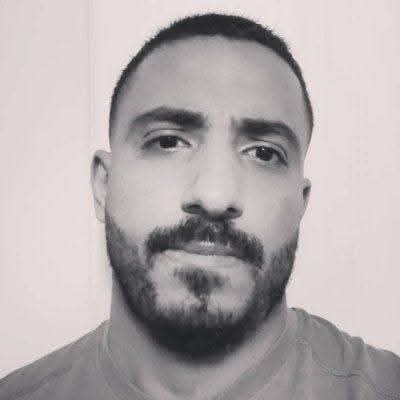
I’m Wael M. Nasser, a Canadian-Yemeni researcher trained in geography and economics. My work examines migration, borders and the relationships between government policy, digital technologies and international relations.
I spent six years working on migration research at the University of Lethbridge. My SSHRC-funded master’s research (2023) examined YouTube’s role in providing information about irregular migration to Canada, alongside the government’s use of digital platforms, advertising and online monitoring. Research from my undergraduate honours thesis (2018) was cited in a submission to the House of Commons immigration committee. I was also among the winners of IRCC’s National Essay Challenge and co-authored a Journal of Borderlands Studies article on Canada’s COVID-19 border closures.
Before this, I spent three years providing Arabic–English interpretation and translation to help Syrian newcomers access legal, health and community services in Canada. My current research interests include Canada’s changing relationships with Southeast Asia, especially Indonesia, and the growing role of technology companies in border governance.
I welcome research partnerships, policy-analysis projects and conversations with organisations, journalists and researchers. See Work & Collaboration or write to [email protected].
ZAH-ZAHA is an independent project. It does not speak on behalf of the universities, agencies or other organisations associated with my past work.
Thanks
This work has taken years, and it has never been mine alone.
I am grateful to Julie Young, who supervised my undergraduate honours and master’s research and encouraged me to pursue difficult questions; to Geoffrey Hale, Ivan Townshend, Yale Belanger and Wei Xu for their guidance; to Alaa Azazi for helping collect the YouTube material used in my master’s research; and to Sara Al-Mahbshi, who introduced me to migrants I later interviewed during that research.
I am also grateful to Rabindra Chaulagain, with whom I worked on several research projects from 2018, including our research on Canada’s border policies during COVID-19, for the conversations, ideas and collaboration we have shared over the years.
I also thank the Social Sciences and Humanities Research Council of Canada for supporting my master’s research, and the people who trusted me with their migration stories.
I am especially grateful to my mother, my late father, and my family and friends for their love, conversations and support over the years. The conversations I had with my father about politics and the world around us remain part of why I continue asking these questions.
Pilot edition · 10 November to 17 December 2026
This is a temporary introduction. On 18 December 2026, a fuller About page will replace it, with the story of Yemen, Indonesia, the name ZAH-ZAHA, and the research journey that brought them together.